
Phoenix Can Reduce Homelessness with Zero Budget by Updating its Laws
Originally published 4/6/2026 on the ASU Law Journal for Social Justice Blog
This year marks 100 years since Village of Euclid v. Ambler Realty Co. empowered cities to restrict property rights beyond what is necessary for safety. Today’s housing shortage and homelessness crisis trace back to how city governments used that authority.
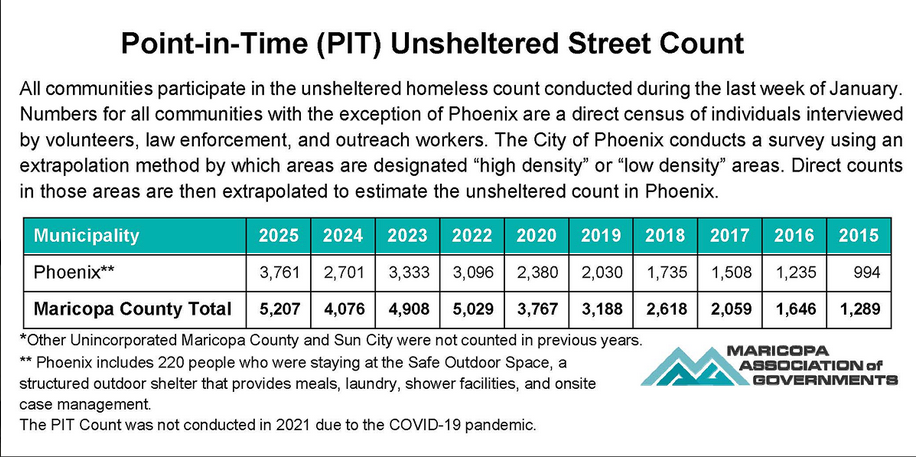
The primary driver of homelessness is rising housing costs. Unsheltered homelessness reached its historical peak locally in 2025, in line with the country at large. Phoenix is short more than 24,000 housing units, and has seen average home prices double in eight years. Housing shortages increase prices, inviting speculation, hoarding, and short-term rental conversions in a vicious cycle.
In 1926, the Euclid Court upheld a suburb’s ban on multifamily housing development, reasoning that multifamily dwellings were “mere parasites,” mixed-use neighborhoods were disorderly, and single-family homes were socially superior. In the wake of this decision, cities like Phoenix used their new powers to reserve over 75% of city land exclusively for detached homes on large parcels distant from jobs and commerce, suppressing lower-cost housing forms and walkability. A hundred years later, the consequences of these policies are the rising costs of living, economic segregation, and car dependency we see today.
Phoenix should abandon Euclid’s outdated logic and update its laws to discontinue the chilling effect on space-efficient, naturally occurring affordable housing (NOAH). Several legal reforms would increase the supply of NOAH and reduce homelessness over time, at no cost to taxpayers.
Source: Maricopa Association of Governments
First, Phoenix can amend its construction code to allow single-stair residence buildings. The current Phoenix code requires two stairwells connected by a hallway, giving apartment buildings a significantly larger footprint. Single-stair buildings with four apartments per floor allow smaller, more space- and cost-efficient buildings with larger dwelling units, more bedrooms, windows, and better cross-ventilation. Despite popular belief, single-stair buildings have equal or better fire-safety outcomes. Since they fit on small urban lots, they can be added in the urban core, near transit and jobs, where Phoenicians drive less, so are less burdened by transportation costs.
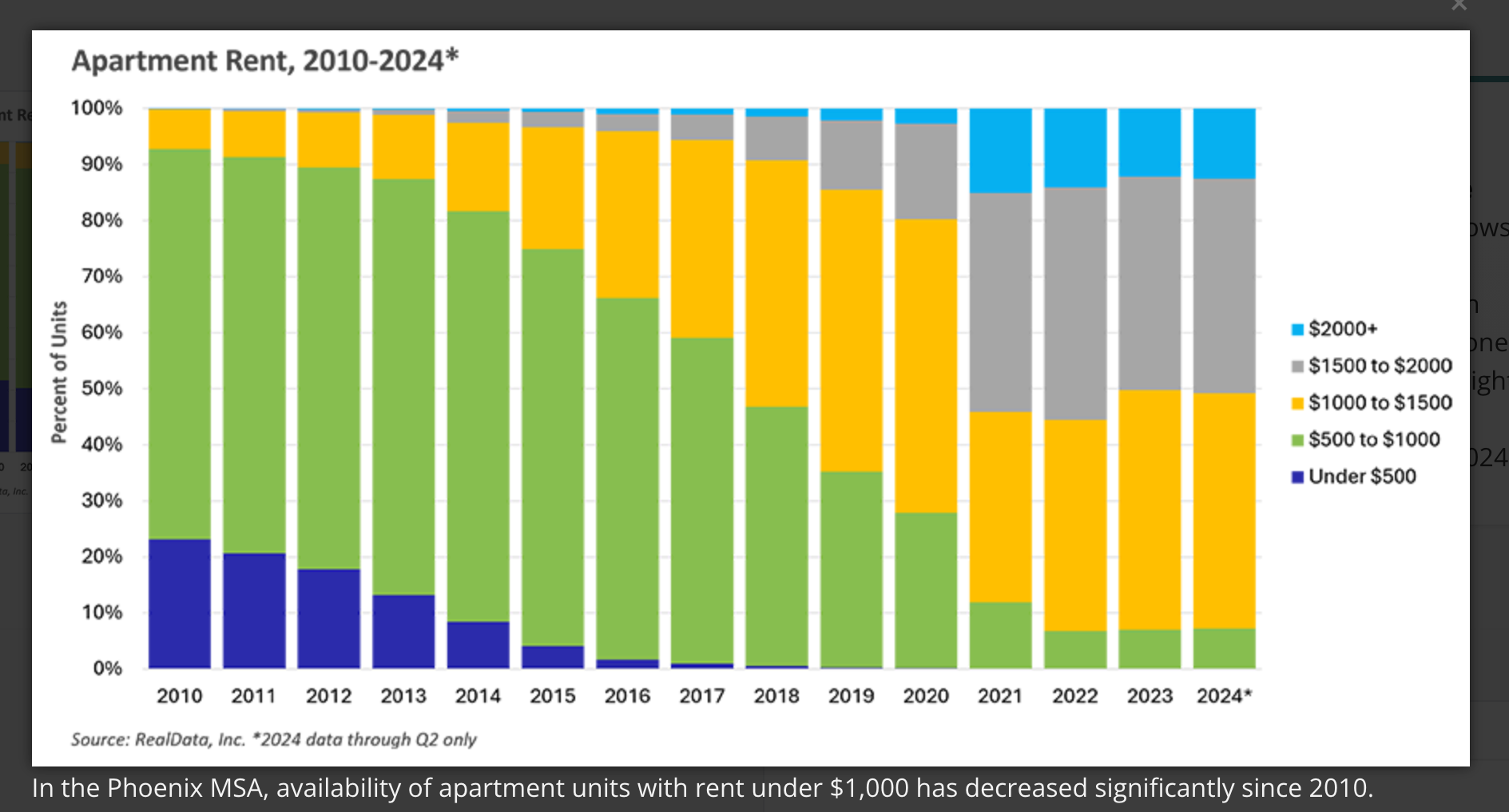
Second, Phoenix can lift its ban on single-room occupancy (SRO), also known as boarding houses. As recently as 2010, nearly a quarter of Phoenix rentals cost $500 or less per month—about $750 in today’s dollars. That tier has disappeared. Legalizing SRO would allow deeply affordable options for students, fixed-income seniors, the temporarily underemployed, and people recovering from personal crises.
Third, Phoenix can allow “middle housing” by right. Triplexes, fourplexes, sevenplexes, and small apartment and condo buildings were commonly built in Phoenix pre-Euclid. Phoenix City Council resisted an attempt by the state legislature to unban these housing forms in 2025, opting to allow them by right on only 1.6% of city land, even while Tucson and Flagstaff restored them citywide.
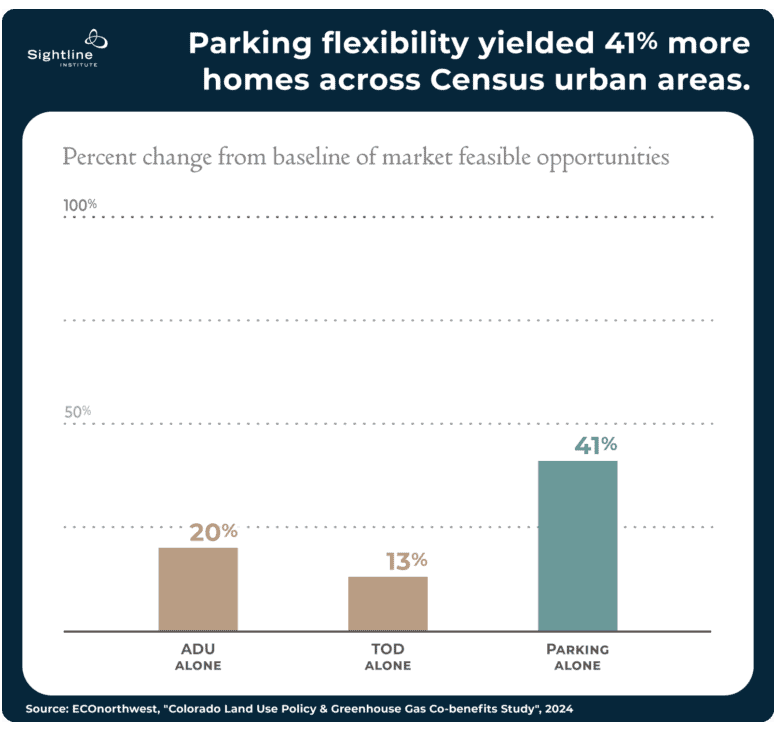
Additional legal reforms like parking flexibility and smaller minimum lot size would also result in increased NOAH near jobs over time.
Phoenicians are struggling to buy homes, pay rent, pay for their cars, and are being evicted at the highest rates ever. If our leaders reject the classist reasoning in Euclid, they should revise the city laws it inspired. Budget constraints don’t excuse inaction where current city law is part of the problem.
